
Blood is an essential body fluid that circulates through the arteries and veins. It delivers essential substances like nutrients and oxygen to tissues and organs and removes waste products from the body. It is a fluid connective tissue and a complex mixture of cells, proteins, nutrients, hormones, and other compounds.The average human adult contains 4-5 liters of blood formed by cellular components and plasma. It plays a crucial role in maintaining homeostasis and supporting various physiological functions.
Functions
- Oxygen Transport: Red blood cells (RBCs) transport oxygen from the lungs to body tissues.
- Carbon Dioxide Removal: RBCs also carry away carbon dioxide from tissues back to the lungs.
- Nutrient Delivery: Blood delivers nutrients like glucose, amino acids, lipids, and vitamins derived from food to all cells.
- Waste Product Removal: It transports metabolic waste products like nitrates, creatine, nucleic acid away from the cells.
- Regulation: Blood helps maintain pH balance, temperature, and electrolyte levels.
- Hormone Transport: Glands release hormones (secreted by endocrine glands) into the blood, which distribute them to target tissues.
- Protection and defense: It allows cells and immunological proteins to transport from place to place where need them.
- Blood Clotting/Coagulation: Coagulation play an important role to repair blood vessel.
Composition of Blood 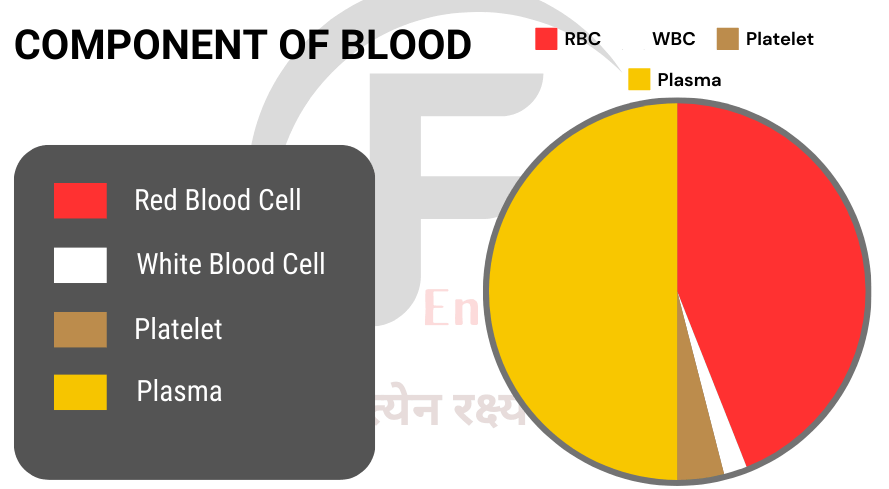
Blood is made up of two parts:
- Plasma: Approximately 55% of the entire volume of blood is made up of non-living extracellular matrix.
- Cellular Component: It is approximately 45% of entire volume of blood.
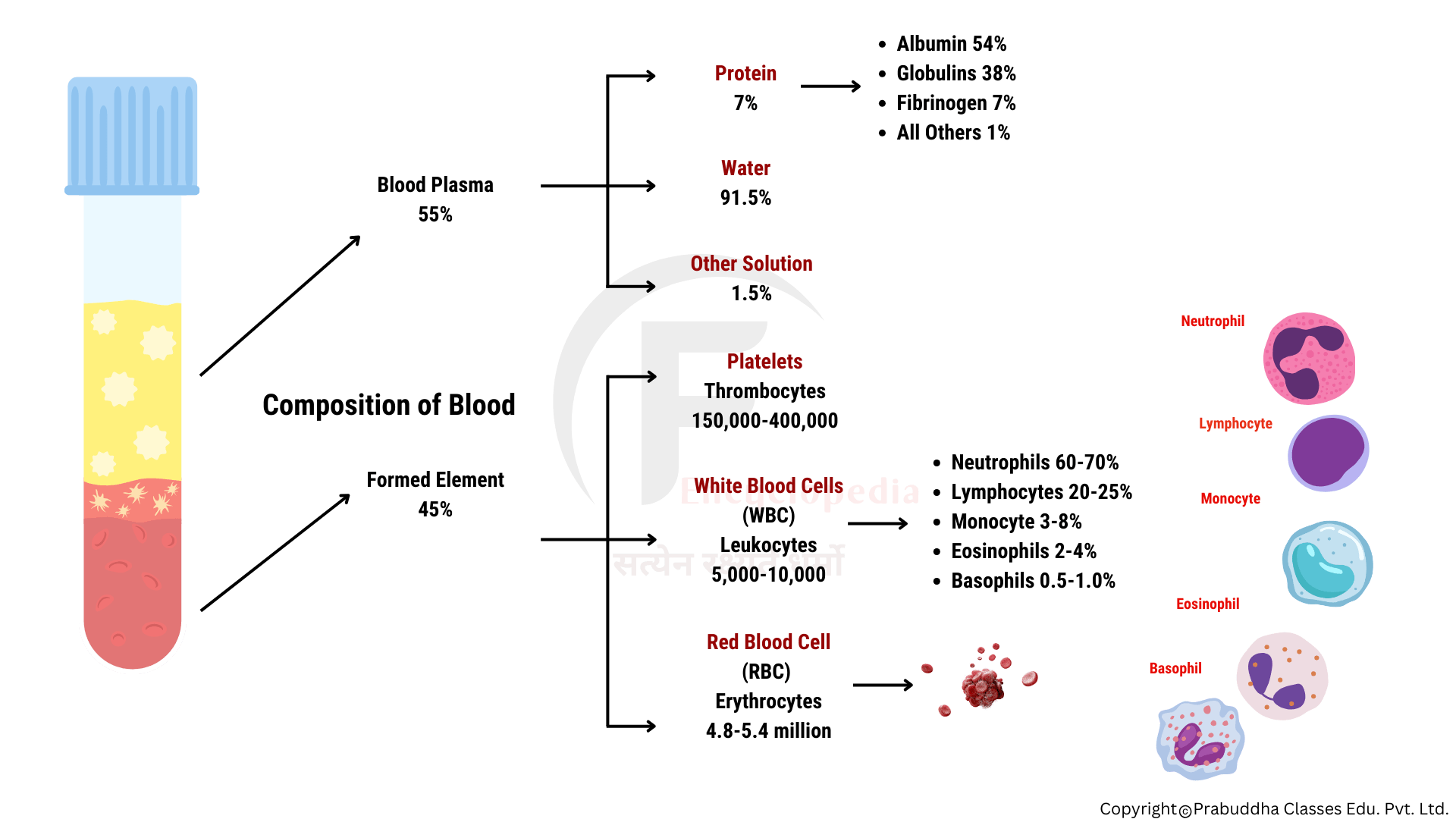
Blood Plasma
Blood plasma is the straw-colored, liquid component of blood that makes up approximately 55% of the total volume of blood. It is a complex solution primarily composed of water (about 90% by volume) along with a variety of dissolved substances, including proteins, electrolytes, hormones, nutrients, gases, waste products, and other molecules.
Water (90-92%): Acts as solvent and suspending medium for components of blood.
Plasma proteins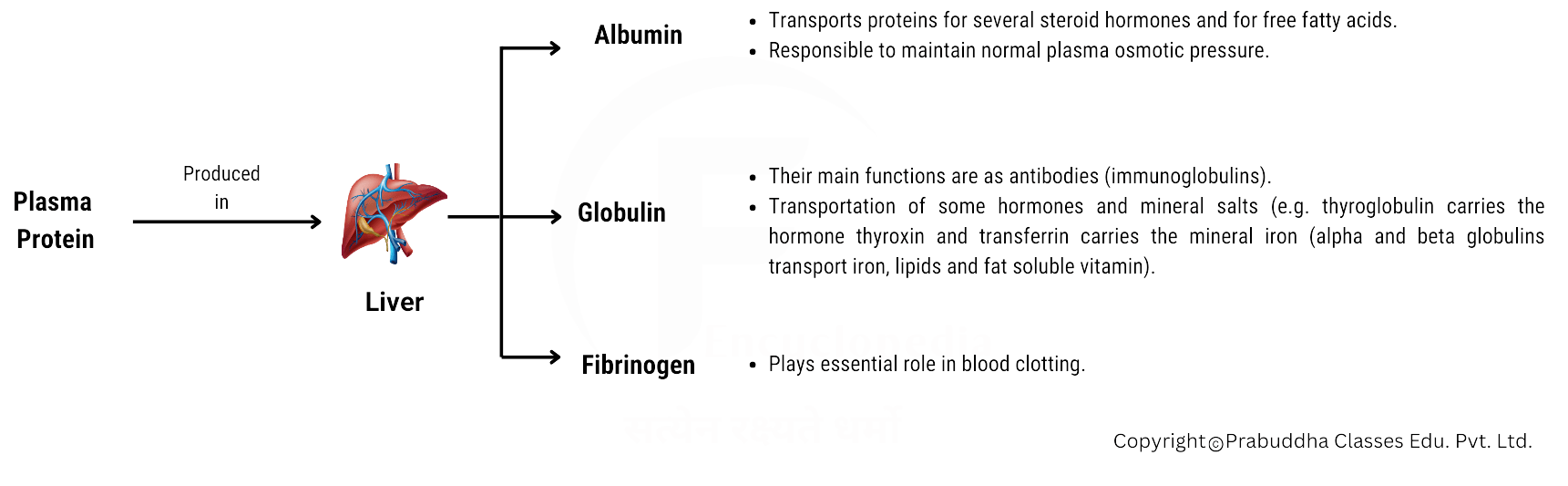
- Albumins: About 55% of total plasma protein is composed of albumin.
- It is smallest and most numerous blood plasma proteins produced by liver.
- Albumin Transports proteins and are responsible for maintain normal plasma osmotic pressure.
- It also act as carrier molecules for some drugs and steroid hormones.
- Globulins: About 38% of total plasma protein is composed of Globulin.
- It is produces by liver and plasma cells, which develop from B lymphocytes.
- It participates in immune system as antibodies (immunoglobulins)
- Fibrinogen (Clotting factor): About 7% of total plasma protein is composed of Fibrinogen.
- It is produced by liver.
- Responsible for blood coagulation.
Electrolytes: Inorganic salts like positively charges ions (cations) include Na, K, Ca, Mg and Negatively charged ions (anions) include Cl, HPO4, SO4, HCO3.
- It Help maintain osmotic pressure and plays essential roles in function of cells.
Nutrients: Products of digestion pass into blood for distribution to all body cells.
- It Includes amino acids(from proteins), glucose(from carbohydrates), fatty acids and glycerol(from triglycerides), vitamins and minerals.
Gasses: It carry Oxygen, Carbon dioxide and Nitrogen.
- More O2 is associated with hemoglobin inside red blood cells and more CO2 is dissolved in plasma.
- N2 is present but has no known functions in the body.
Regulatory Substances: It regulates regulatory substances like enzyme, hormones and vitamins.
- Enzymes, catalyze chemical reactions.
- Hormones, produced by endocrine glands, regulate metabolism, growth and development.
- Vitamins are co factors for enzymatic reactions.
Waste Products: Most of the waste product are breakdown products of protein metabolism and are carried by blood for excretion. It includes urea, uric acid, creatine, creatinine, bilirubin and ammonia.
Cellular Component (Formed Element)
Red Blood Cell
Red blood cells (RBCs), also known as erythrocytes, are one of the functional component of blood that play a crucial role in transporting oxygen from the lungs to tissues throughout the body and removing carbon dioxide, a waste product of cellular metabolism, from the body.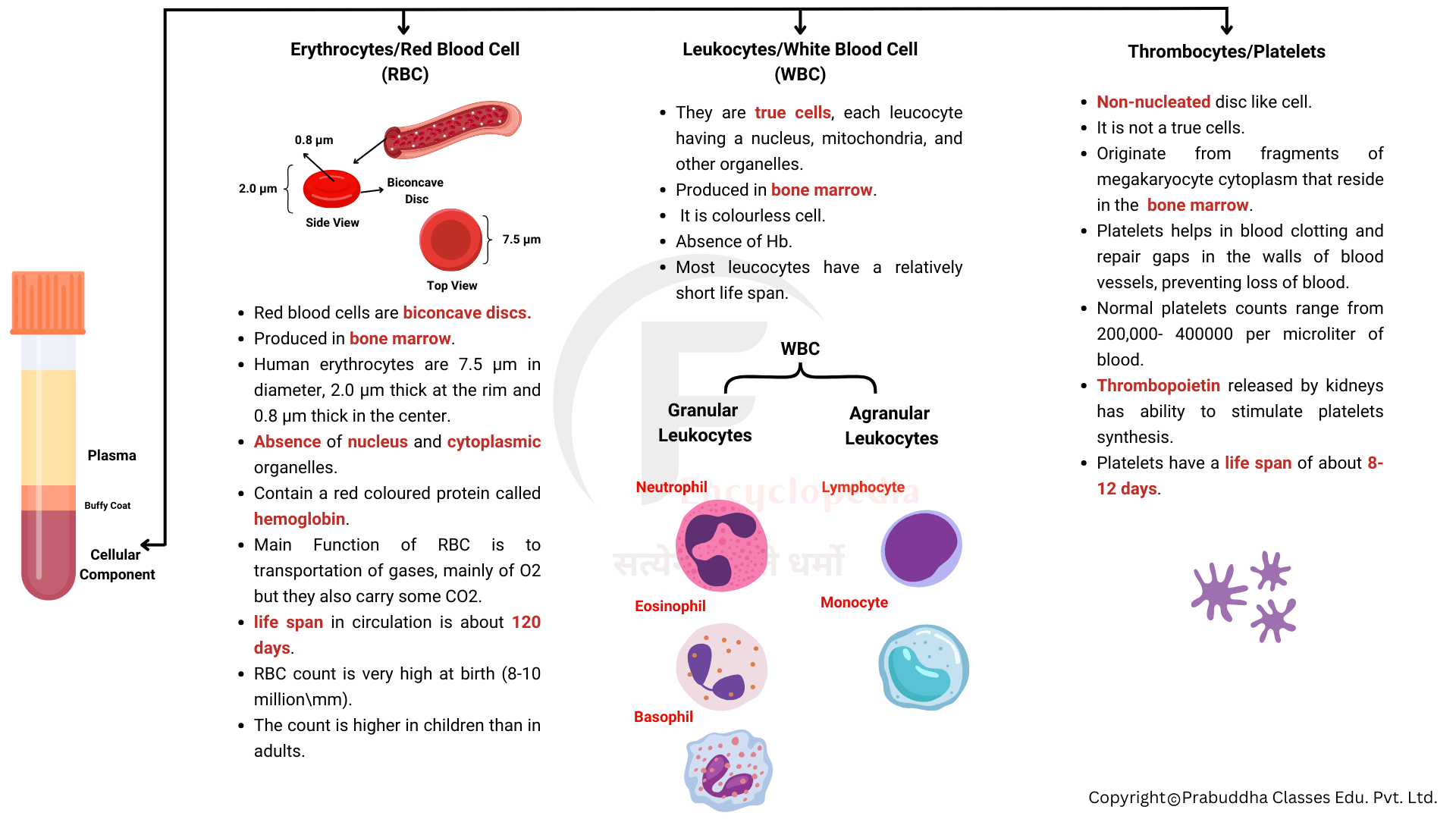
Structure
- Disc-shaped cells.
- Diameter is 7.5 µm, 2.0 µm thick at the rim and 0.8 µm thick in the center.
- Lack of nucleus (non-nucleated) and most organelles, including mitochondria.
- The unique structure of RBC maximizes their capacity to carry oxygen.
- Instead of a nucleus, RBCs contain hemoglobin, a protein that binds to oxygen and carbon dioxide.
- Hemoglobin gives RBCs their characteristic red color and is responsible for their oxygen-carrying capacity.
Production: RBCs are produced in the bone marrow through a process called erythropoiesis.
Lifespan: RBCs have a limited lifespan, typically around 120 days. As they age, RBCs become less flexible and more prone to destruction by the spleen.
Function
- The primary function of RBCs is to transport oxygen from the lungs to tissues and organs throughout the body.
- Oxygen binds to hemoglobin in RBCs in the lungs, forming oxyhemoglobin, which is then carried through the bloodstream to tissues where oxygen is released to support cellular metabolism.
- RBCs also play a role in removing carbon dioxide from tissues, transporting it back to the lungs, where it is exhaled from the body.
White Blood Cell
White blood cells (WBCs) or leukocytes are the colorless, nucleated cellular component of blood (leuko = white or colorless). Compared to RBCs, the WBCs are larger in size and lesser in number.
Types of White Blood Cells
Based on the presence of granules in their cytoplasm WBC are categorised as Granulocytes and Agranulocytes.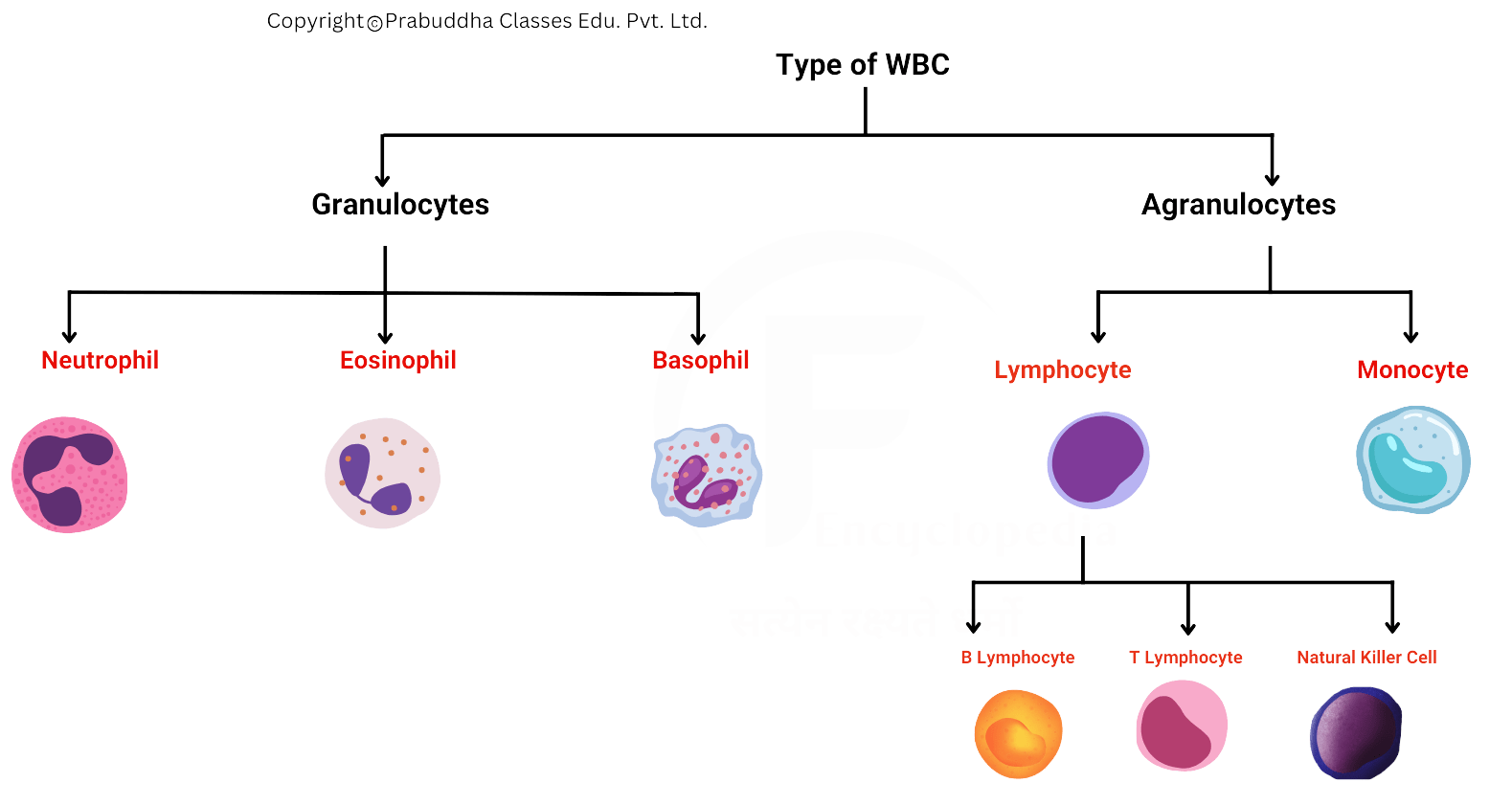
Granulocytes, are of three types:
Neutrophil
- 60%-70% of all WBCs
- Diameter is 10-12µm
- Nucleus has 2-5 lobes connected by thin strand of chromatin
- Cytoplasm has very fine, pale, lilac granules
- Neutrophils are active phagocytes that ingest bacteria and release enzymes to eliminate them.
Eosinophil
- 2-4% of all WBCs
- Diameter is 10-12µm
- Nucleus usually has 2 lobes connected by thick strand of chromatin
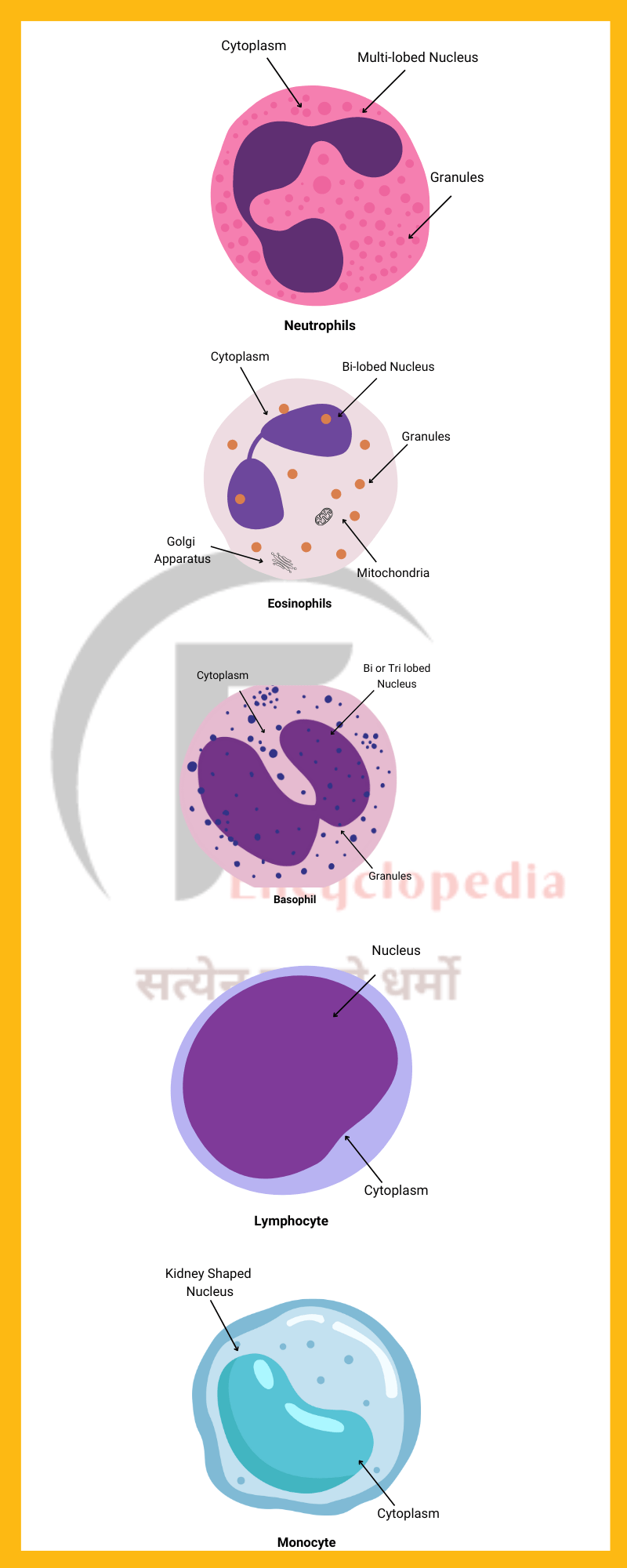
- Large, red orange granules fill the cytoplasm
- Eosinophils are particularly important for fighting parasites.
Basophil
- 0.5-1% of all WBCs
- Diameter is 8-10µm
- Nucleus has 2 lobes
- Large cytoplasmic granules appear deep blue-purple
- Liberate heparin, histamine and serotonin in allergic reactions that intensify the overall inflammatory response.
Agranulocytes, are of two types:
Lymphocyte
- 20-25% of all WBCs
- Small lymphocytes are 6- 9µm in diameter and large lymphocytes are 10-14µm in diameter
- Nucleus is round or slightly indented
- Cytoplasm forms a rim around the nucleus that looks sky blue
There are three main types of lymphocytes:
- T cells: These lymphocytes mature in the thymus gland and are involved in cell-mediated immunity. T cells are responsible for directly attacking infected or abnormal cells, coordinating immune responses, and regulating the immune system’s activity.
- B cells: Produced and matured in the bone marrow. B cell produces antibodies (Ab) (Antibodies are protein that recognize and neutralize specific pathogens or foreign substances).
- Natural Killer (NK) cells:
Monocyte
- 3-8% of all WBCs
- 12-20µm diameter
- Nucleus is kidney shaped or horseshoe shaped
- Cytoplasm is blue grey and has foamy appearance
- Monocyte perform crucial roles in phagocytosis, antigen presentation, inflammation modulation, and tissue repair, contributing significantly to the body’s defense against infections and maintenance of tissue homeostasis.
Platelets/Thrombocyte
Thrombocytes, also known as platelets, are cellular components of the blood responsible for the clotting process, which is vital for wound healing and preventing excessive bleeding.
Structure
- 2-3µm diameter
- They lack a nucleus but contain various organelles essential for their function, such as mitochondria and granules containing clotting factors.
Production: Thrombocytes are derived from megakaryocytes in the bone marrow.
Lifespan: The average lifespan of platelet is just 5-9 days.
Function
- The primary function of thrombocytes is to form blood clots to seal damaged blood vessels, thereby preventing excessive blood loss.
- Mechanism of Clot formation: When a blood vessel is injured, thrombocytes adhere to the site of injury and become activated, releasing chemical signals that attract other platelets to the site. They then aggregate to form a temporary plug, which is further stabilized by fibrin strands formed during the coagulation cascade.